
Why are gas leaf blowers are being banned across the country?
Gas leaf blowers are stirring up more than just leaves and fumes. The dust up over gas-powered leaf blowers stems from a combination of environmental, health, and noise concerns. Here’s a breakdown:
1. Environmental Impact
- High Emissions: Gas-powered leaf blowers often use two-stroke engines, which are notoriously inefficient. They burn a mix of oil and gasoline, releasing pollutants like carbon monoxide, nitrogen oxides, and unburned hydrocarbons into the air.
- Comparison to Vehicles: Studies have shown that operating a gas leaf blower for an hour can emit as much pollution as driving a car hundreds of miles.
- Climate Change: The emissions contribute to greenhouse gases, exacerbating climate change.
2. Health Risks
- Airborne Particles: Leaf blowers stir up fine particles, including pollen, mold, allergens, and even dried animal feces which can aggravate respiratory conditions like asthma and COPD.
- Toxic Fumes: The exhaust contains harmful chemicals that can be inhaled, posing risks especially to landscapers and those who frequently use these tools.
3. Noise Pollution
- High Decibel Levels: Gas blowers can exceed 100 decibels, which is not only disruptive to neighbors, but can also lead to hearing damage with prolonged exposure.
- Community Disruption: The noise from leaf blowers is often a nuisance in residential neighborhoods, leading to complaints about reduced quality of life.
4. Sustainability and Alternatives
- Leave the leaves: Leaving a cover of organic material will save you money and time with yard maintenance. Leaves are free mulch, free fertilizer, and free runoff control. They won’t kill your lawn despite what the industry wants you to believe.
- Raking and Mulching: Raking leaves under trees and shrubs and in garden beds to decompose enriches the soil and supporting beneficial insects that perform free ecological services like decomposers and pollinators.
5. Policy Changes
- Many municipalities have started regulating or banning gas-powered leaf blowers to address these concerns including the city of Annapolis.
The movement against gas-powered leaf blowers reflects a broader push toward more sustainable and community-friendly landscaping practices.
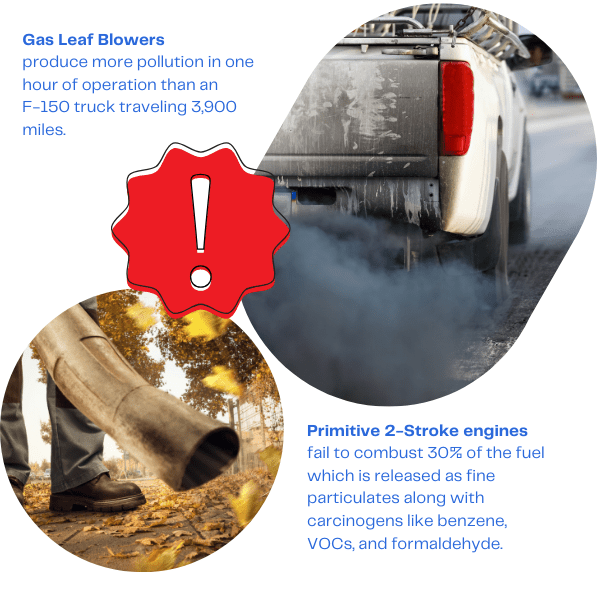
The Primitive 2-Stroke engines fail to combust 30% of the fuel which is released as fine particulates along with carcinogens like benzene, VOCs, and formaldehyde.
Gas leaf blowers produce 2-4 pounds of particulates per hour that can lodge deep in your lungs and enter the bloodstream – especially harmful to lung development in children.
Gas leaf blowers produce more pollution in one hour of operation than an F-150 truck traveling 3,900 miles.
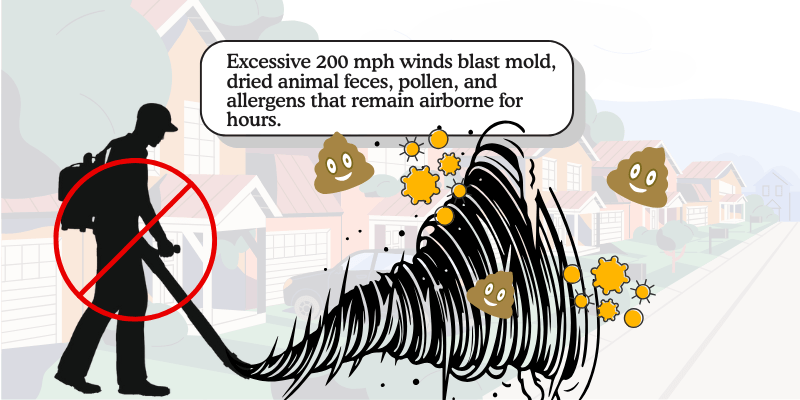
Extreme winds
blast pollen, heavy metals, dried animal feces, mold, allergens, pesticides, and dirt into the air remaining airborne for hours and clinging to window screens and other surfaces.
200 mph wind speeds
unnecessarily blast the soil with a force equal to a category 5 hurricane.
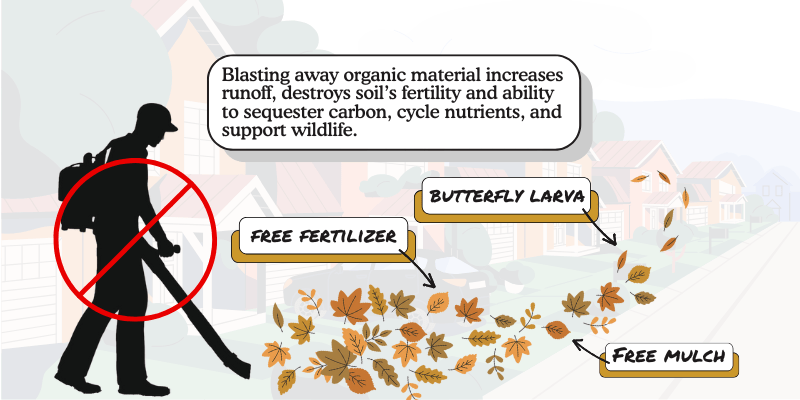
Removing organic matter
increases runoff and destroys soil’s ability to sequester carbon, depletes soil health, destroys microbial life and beneficial insects.
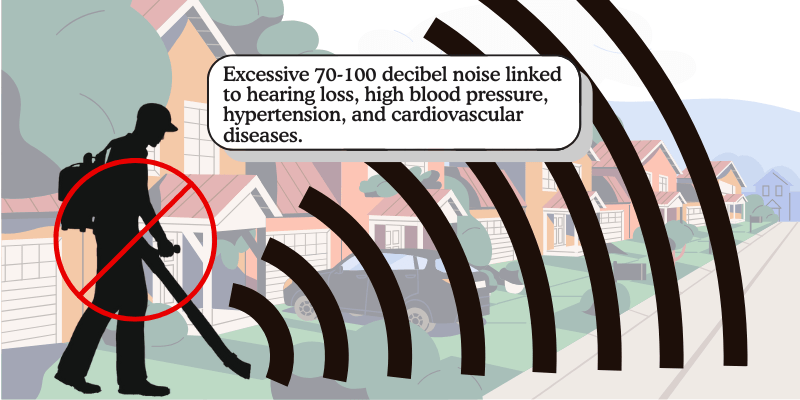
Low Frequency Noise
penetrates neighbors’ walls and windows disrupting work, concentration, waking children from naps, causing stress, and imposing on your neighbors’ right to a peaceful soundscape.
Extreme noise between 70-100 decibels is known to cause permanent hearing loss, high blood pressure, hypertension, and cardiovascular disease.
Low Frequency Noise travels farther – up to half a mile – typically affecting 90 neighbor’s homes.
 Promoting peaceful, healthy communities in Annapolis, MD.